Showing posts with label character development. Show all posts

Thursday, November 8, 2018

My first week of NaNo

I used to post updates about writing projects on Thursdays. I haven't had a writing project in a really long time, so I haven't been posting writing updates on Thursdays.

National Novel Writing Month is going well for me. I wasn't sure if it was going to. I have so much going on during November, and this is maybe the busiest November I've had yet. I basically kicked all this off doing some of my writing on the dang airplane because I didn't have time to do it any other time.

What's really interesting about NaNoWriMo for me is that the pacing gives me an excuse to stop.

I'm such a binge writer. When I get into things I just get absorbed and want to finish, and I sacrifice a lot of sleep and attention to do so.

NaNo is supposed to press people into short-term sustainable writing patterns to get them writing, push them to turn off the inner editor, incentivize them to write something so they get some practice and have something to sculpt later if they like what comes out. I haven't historically had those problems, but the problem I do have is that I know how much writing takes out of me and I have been reluctant to start a project because I'm already overwhelmed and stressed.

But if I write a little bit each day and pace myself, and keep an eye on the word count, and stop when I'm around the goal, I don't have to make huge adjustments to the rest of my life just to write a book in a relatively short amount of time.

It's neat.


Add caption


Observations about my book so far:

  • The word count on Day 8 is 14,001.
  • I think this is my first third-person novel.
  • This is a science fiction story set in the distant future. The worldbuilding for it is very quiet, and I'm worrying that the reveals are a little too as-you-know-bob.
  • Lots of dialogue.
  • It's more romantic than I thought it would be--the romance is front and center, and early.
  • I got the main characters to kiss. It took me 12,798 words to get there.
  • I'm not good at naming alien places. Who names a continent "Dry Lace"?
  • I am obsessed with Steven Universe, which has a lot of space lesbians in it. I am also writing about lesbians in space. And yet, it is nothing like Steven Universe.
  • However, I think I've learned more about slow reveals for worldbuilding and character history from watching that show.
  • I'm reusing concepts and names from the short story I'm basing this book on. The short story was written almost 20 years ago. I'm not sure why I feel a loyalty to the names even though I've changed a lot of the specifics of their lives.
  • I cut and pasted a tiny bit of the original text into an interlude and I didn't like the flavor, so I won't do it again.
  • I like the book so far but I'm not super excited about it. Maybe it will totally surprise me soon. 

Monday, April 2, 2018

Sci-Fi Aliens

All right, I get to write about cartoon stuff and writing-related junk again!

So I was drawing a weird comic about Steven Universe characters like I do when I'm thinking about stuff (you know, a large chunk of my waking hours), and when I was drawing this one character named Rhodonite, I thought about some stuff.

Like, she's weird--she's a space alien with two sets of eyes and two sets of arms. But when it comes to the gestures and faces she makes, they're consistently very recognizably human expressions.

(From my in-progress comic)

On the TV show, the Gem race is a strange one--essentially, they kind of don't really have bodies. Some statements about their physical existence that they've tossed out include "Our bodies are only an illusion" and "think of it like a hologram, but with mass." The only "real" physical part of these aliens is a gemstone that holds their entire existence encoded into information, and the rest is a projection.

So, if an alien race has that much freedom in how they manifest their bodies, why are all they all humanoid?

The extra eyes and extra arms make Rhodonite look pretty alien, sure, but most of the Gem characters don't even have that; she's different because she's a type of entity known as a Fusion--she's actually two individuals who chose to live their lives together, so they share a body and some of their features are doubled up. If you're this kind of alien, why even have arms, or legs, or eyes? Why choose to interact with the physical world using such a similar framework to that of humans? Or why not look MORE human, in the case of the Gems who live where humans do? Most of the characters who live on our planet are humanoid but don't make any effort to blend in, so they have oddly colored skin and sometimes inhuman proportions. What influences these choices? Is it "realistic" for a science fiction show to make their aliens look like this?

Star Trek got some criticism over how their aliens were so frequently just humans with minor prostheses. Want a new alien race? Give your actors a weird lumpy forehead, pointy ears, or fancy contact lenses. Really, some said it was either human egotism or lack of imagination that had them building 90% of their aliens off a human template. But given the limitations of a television show that has to deal with expensive wardrobes, special effects, and actors' ability to act through the costume, it made sense that they might take those shortcuts.

Why, then, would you do it in animation? Or, for that matter, in novels?

Here's the reason I don't have any problem at all with how unrealistic it is. It's because of WHY we tell stories.

We tell stories to communicate concepts to each other. To entertain, to teach, to compare, to understand. There is a time and a place for a really awesome extremely alien concept that incorporates a scientific understanding of how an alien race might actually develop on a distant planet. There is a time and a place for incredibly foreign, inhuman ideas of how society and culture might work for aliens. And it's so incredible when some talented science fiction creator manages to do it. But the problem also with those kinds of aliens is that we spend more time in the story getting our heads around them than we do understanding the story they're there to tell.

Sometimes, like on Star Trek or Steven Universe, the creators want to bring aliens into their stories but they want their messages to be clear. They want us to read the signals they're sending instead of having to stop everywhere to figure out whether these aliens are communicating what we would be communicating with that gesture. That even varies amongst cultures on Earth, so of course a realistic alien probably wouldn't use many of the same shortcuts.

But if you watch Steven Universe, sometimes you'll see a four-eyed, four-armed alien on a distant planet in space telling you things you can nevertheless instantly read through her gestures. Her raised eyebrows mean what ours do. So do crossed arms, open-palmed gestures, and tears. When her voice goes up at the end of the sentence, she's asking a question. When she's scared, she looks like we do.


We don't have any explanation in the show for why the characters all speak English, or why they pant after putting out a lot of physical effort even though they literally have no internal organs, or how they can cry or spit or sweat if they don't eat or drink or breathe. Or rather, we don't have an explanation for it that would make scientific sense. But the "actual" explanation is that the audience knows what it means when a character cries, and we'll attribute the appropriate emotions to that character with much more authenticity if we see them demonstrating physical cues that we would if we were in the same situation. If the purpose of this show is to tell a story and increase connection, it's really not necessary to withhold scientifically implausible character traits in the name of realism. 

Thursday, March 29, 2018

Telling the Future [GIF warning]

My blog lately has mostly been personal stuff or philosophical rambles, but when I first started it, it was mostly because I wanted a semi-personal blog that focused on my own writing career and also writing-related advice. With a side of book reviews thrown in.

As I've been spending less time with my writing and have no projects in the publishing pipe right now, it's drifted into more everyday topics, and mixed in with the personal stuff and cartoon nerd stuff. But now I have something writing-related to talk about that's also both personal AND about cartoon stuff!

This week my favorite show Steven Universe released four new episodes, and two of them focused on my favorite character Garnet. It was the second one that really got my attention, and caused me to write an essay the next morning that I threw onto Tumblr and one of the first people to reblog it tagged it "#GO F#&*%ING READ THIS PLEASE." People seemed excited about what I wrote, but these observations and clarifications came out very quickly and easily for me because they drew on writing experience I've had for over a decade. Okay, wait, I'll explain a little bit better.

On the show, Garnet is the leader character--for a couple good reasons. First, she's the calm/cool/collected one--just a good match personality-wise if you want someone who can lead a team in high-stress, dangerous situations. But the second reason is a pretty big deal: Garnet has a limited ability to foresee possible futures. 


Garnet uses that ability to guide the team toward mission objectives and keep them safe. I've written a couple of characters with similar abilities--one in my webcomic Negative One, one in my novel Bad Fairy--and I see a LOT of similarities between how Garnet is written and how I've written Adele and Delia.

And maybe it's arrogant of me, but I feel like my experience with this has helped me understand aspects of this show's writing that others seem to miss--especially since the more we learn about how Garnet uses future vision and what limitations it has, the more it seems to dovetail with the experiences of the characters I write. Here's the problem I've been seeing: If you have a character in your story who can tell the future, you have to be very careful about how you use her. After all, if your character can foresee disasters and then your story includes a disaster, why didn't she report it? Prevent it? Did she not see it? If not, what's the sad excuse why not?

That's what I see a lot of in criticism of this character, and of precognitive characters in general. Viewers seem to think it's "cheap" when these characters conveniently see some things and not others. Some critics think it's bad writing if sometimes their abilities just aren't working or they decide to let bad things happen so other characters can learn from it. And let's be honest, it's true that if you have characters who can see the future around, the opportunity for any character allied with them to be surprised by unexpected crises goes down, limiting some realism for your storytelling.

There have been some huge developments in the show over the past couple seasons which, yeah, wouldn't have happened if Garnet had predicted the future correctly. She at least tried to stop the first one--Steven's dad got kidnapped by aliens--but in her defense, in that case it made sense that she had no solution for the problem because the kidnapping involved her oldest enemy, a Diamond, and she was scared to death of her, to the point that she just kept saying she couldn't even put it into words. She told Steven not to go to Korea and he went to Korea anyway. So what happened wasn't really her fault. 


But after that? 

A series of catastrophes occurred in a row and she had nothing to say. A Ruby came to Earth and tricked their team, and their only spaceship got stolen. Steven got involved with another kidnapping plot and sacrificed himself to the enemy, ending up stranded on the Gem homeworld with one of his friends who ended up DYING in a battle. (Don't worry, he's okay now.) And then after he miraculously got himself back to Earth, he ended up stranded, AGAIN, on a distant moon with his best friend. There was not a whisper from Garnet about worrying about these events or preventing them. She has said very little for the entire previous season. Some critics of the show are saying the writers seem to have forgotten she's part of the cast, and they make wisecracks about her voice actress being too expensive.

This week, the new episode "Pool Hopping" revealed that the recent events have not been showing up on Garnet's radar and the whole experience has been baffling to her, and she's actually really upset about it. 


She is not an emotionally expressive character, so you never know what she's thinking behind that stoic mask (or those epic shades) until or unless she gives you a rare glimpse or has a breakdown or something. This episode had one of those breakdowns. Ordinarily, Garnet does not behave as if she's struggling at all--she believes that the others need a strong, confident leader who never falters and is entirely sure of everything she does, so she doesn't like to admit when she's feeling weak. But in this episode, she deliberately behaved in ways that were very strange for her, believing that it would help her access these "improbable" futures she's been missing. It was funny at first, because watching this typically stoic character doing silly things like getting a job at the donut shop, posing as a model for a local artist, and running around throwing pizza at people seemed like wacky fun until you realize it was desperation. 


In this episode, she admits to Steven that she has felt utterly lost lately because things keep happening that she never saw coming, and she doesn't know why. Through some investigation, they realize she's been considering certain futures unlikely because she's failed to acknowledge how mature Steven has gotten lately, and that's affected how likely she judges certain futures to be and how she interprets her results. Paths she didn't see as probable or possible just blindsided her because she didn't follow them where they would naturally lead, and she's been really upset about it because she knows it's her job to lead everyone--that they look to her for what to do, and she's supposed to have the answers.

Some of the folks who watch this show are treating this like new information--the idea that a character like Garnet interprets and guides her ability has apparently never occurred to some of them. I'd already picked up on this from a much earlier Season 2 episode (context: we're in the middle of Season 5), where Garnet didn't see a really intense internal betrayal happening right in front of her because she believed a villain was responsible, and she grumped about how annoying it was that she just couldn't see any futures with them catching the bad guy. She doesn't just see an objective series of futures and possibilities. This ability, like anyone else's typical senses, is guided by what she expects to see.


When you write characters with poorly understood powers, tying them into familiar methods of judgment and other senses makes them more relatable--and also adds the necessary flaws so they don't become overpowered or create plot holes. One of my webcomic characters frequently encounters murky spots in her otherwise clear visions because of emotion; if she WANTS something to be true or has a lot of investment in its outcome, that colors whether she's seeing it properly, so she's trained a lot of her life to downplay her feelings when she shifts her consciousness. It's just not always possible, because searching the future is not an emotionless task in itself. And present knowledge limits what questions my fantasy novel character knows to ask; she has a lot of reach with her "knowing magick," but she still has to know where to point it, and sometimes her usefulness is undermined by her own understanding of what's possible.

Those are both aspects of Garnet's character that the show's been presenting all along, and aspects of her that have recently been explicitly discussed in the episode "Pool Hopping." And from this, I can extrapolate that her future vision is identical in some ways to my character Adele's prophesying and my character Delia's knowing magick. Most notably, it's very human, though that's an inappropriate word to apply to three characters who aren't human. It's relatable to human audience members because of how it incorporates ordinary perception in its handling of characters with an extra sense or two. As I mentioned in the analysis post I shared on Tumblr earlier this week, it might make more sense if you compare it to typical senses whose limitations and function you understand. Let's say we're talking about sight: just because you can see does NOT mean you know exactly where to look (or even CAN look) to acquire information that can be obtained visually, and it also doesn't mean you'll understand what you saw or be able to describe it accurately.

Same with hearing: maybe you hear a car alarm but you thought it was a fire alarm, and then if people who can't hear are confused as to why you acted like there was a fire, it's really hard to explain to them how EXACTLY two types of alarms can be mistaken for each other. Why would a warning for fire sound so similar to a warning for a car being broken into? Those problems are not similar at all, so why does your hearing insist they might be the same thing? You can't really explain that to people who don't hear. And if you're the only person who hears in your group, it might be hard for the others to understand that you're not really qualified as an expert in types of alarms. Just because you can hear them doesn't mean you understand what they're telling you. That's the role Garnet is stuck in sometimes: she has to interpret these visions of possible futures because she is the only one on her team who can even gather the input, but it's still subject to her interpretation--subject to her judgment, which despite experience can be ordinary.

If a character's "extrasensory" abilities are treated like any other sense in a story, they fall into line very well with good storytelling. Imperfect judgment in both the gathering and the interpretation of that input can control a super-powered character's abilities so they don't make everything so easy for the protagonists that the story becomes boring. It's such a delightful thing to see characters assigned the duty of being sure are just doing their best to be sure; they're people, not impartial oracles with no will, and it's even more "humanizing" to see them just wanting to do a good job. As much as I love Garnet and therefore hate seeing her upset, it was inspiring to see her expressing disappointment with herself balanced against desperate measures to make it right, and seeing her quiet version of panic when it didn't work. 


"Anything could happen to these cats!"
When you write a character whose abilities make them powerful, especially if you write them as uniquely responsible for using that power well, you must understand and express how that ability affects them emotionally and mentally, and also how their emotions and mental state affect the ability. They should always be a person with every talent they have woven into who they are, and if you're a writer struggling with how this works, you can try compare the extraordinary to the ordinary. 

The intent shouldn't be "how can I make the character more flawed?" or "how can I limit their power so the story doesn't get boring?" Flaws and limits are usually natural side effects to exploring all the aspects of a character; if they follow naturally, they'll fill themselves in, so there's no need to deliberately build failsafes and hurdles into a talent. If you think about it and really imagine how experiencing these things would affect a character, especially if they've always had those abilities and fully built their own minds around using them, you will easily find drawbacks--along with various nuances that will help you make a more authentic character.

Monday, April 11, 2016

Character conflict

I just made a new cartoon music video and I'm going to use it as a springboard to talk about today's rambly topic!

First, here's the video. Characters Pearl and Amethyst have a . . . well, a special kind of relationship. (This AMV is set to the song "What Is This Feeling?" from the musical Wicked.)


The song fits them well because they're very much like Elphaba and Glinda, the characters in the musical: they fundamentally hate certain things about each other and are extremely prone to squabbling at the drop of a hat. 


And yet, after some realizations, some intense conflicts, and some bonding experiences, they become very good friends and depend on one another.


In romance, we have this trope where characters hate each other and then realize they are madly in love with each other and proceed to have a passionate romance full of fireworks. But it's just as common with friendships in stories, and we like seeing these kinds of opposites-attract characters throw punches. Especially when it leads to them finding common ground.

So what exactly is this relationship? Do characters have to change as people before they can find this equilibrium? Well no. Of course not. And they're not even necessarily compromising when they begin to see eye to eye. I think, for this to work, characters who squabble and later become close often dislike something about the other character that has its roots in something they don't like about themselves.

For instance, take Galinda and Elphaba. (For those who haven't seen the musical Wicked, Galinda/Glinda is the eventual "Glinda the Good" and Elphaba is the "Wicked Witch of the West," derived from Oz stories, but this is a prequel of sorts, beginning when the characters are in college.) Galinda starts school as an aspiring magic student from an upperclass family, and she's forced through weird circumstances to share a room with Elphaba, who has been chosen over Galinda for a magic apprenticeship. Elphaba also refuses to be the meek "different" girl even though she's bright green and intellectual, so she's pretty aggressive and tries to be proud.

They pretty much instantly loathe one another.

Galinda is popular, pretty, rich, and not too happy about not getting what she expected. And she feels like she works hard and makes sacrifices to remain well-liked and successful, so someone like Elphaba winning the apprenticeship irritates her. And Elphaba may be a misfit in many ways, but she knows what she's good at, and she has spent much of her life trying not to be ashamed of who she is--so obviously a popular girl deliberately leading a charge against her is worthy of intense rivalry.


But after they've bonded somewhat, they do realize they want similar things and care about similar causes, though they continue to have different ways of approaching those things. Glinda admires Elphaba's brash refusal to compromise and willingness to lay her comfort and her life on the line for what she believes, and Elphaba admires Glinda's ability to work within the system and use her charisma to effect change. Neither wants to be what the other is, but they do accept the inherent value in each other's belief systems, and they care about each other as people once they've each stopped seeing the other as a symbol of something they themselves are lacking.


As for the Steven Universe characters Pearl and Amethyst, we don't yet know how they met or what their dynamic was like at that time, though a couple flashbacks from their younger years have shown absolutely no squabbling--if anything Pearl just kind of treated Amethyst like a child and bossed her around a little bit, but she didn't seem to mind.


But based on how we originally meet these characters, they have an antagonistic relationship that reads a bit like sibling rivalry--Pearl as the perfect older one, Amethyst as the screwed up younger one. (Pearl is a LOT older than Amethyst--we don't know how much older, but context suggests she is thousands of years older. She once says she was "only" a few thousand years old when she started fighting in her army, and Amethyst wasn't born yet when their war started.) On the surface, they hate each other because Pearl likes neatness and order and responsible behavior while Amethyst likes messes and chaos and lazy behavior. But that's not the half of it with these guys.

Pearl is not perfect at all, but she clings to that perfect image because keeping things clean and orderly is one of the only things in her life that she can control. She is one of the most broken characters I've ever seen--she's way more of a mess than Amethyst, despite images--and I think that's one of the things she's envious of Amethyst for. Amethyst isn't an anxious person--maybe a little restless sometimes, but not anxious--and her life and history is a lot simpler than Pearl's. She knows how to have fun. I'm not sure if I've ever actually seen Pearl legitimately enjoy herself (with a couple exceptions that also led to pretty awful things that I won't talk about here). She's always just trying to stay afloat and manage her nerves, and Amethyst is a good scapegoat. If you can blame someone for driving you up the wall, you don't have to take ownership of your grief, traumatic stress disorders, and anxiety.


Amethyst kind of buys the "Pearl is perfect" ruse (at least until she sees enough of her breakdowns and processes what they mean). She feels like the oddball in their group--she missed the war everybody else fought in when they saved the planet thousands of years ago; she was born on Earth while her teammates were born on another planet; she's very physically strong but the others are better fighters than she is; she's the only one who enjoys human behavior like sleeping and eating; and she was essentially created by the bad guys in the story and she carries guilt over being an instrument of destruction. Plus if they were on their planet of origin, she would outrank Pearl and everyone on their team because amethysts are quartzes and quartzes are apparently among the biggest badasses in the galaxy, but here on Earth she gets bossed around by everyone. And then there's Pearl telling her she's a mess, she's irresponsible, she's ruining everything. So she takes some comfort in rebelling--sometimes because she needs an outlet for her aggression, and other times just to do it.


But even though they have different interests and values, these two are on the same team. (As their leader, Garnet, sometimes has to remind them explicitly.) They both care about protecting the planet and preserving the lives of those in their care--and they've both been hurt by some of the awful traumatic things that have happened to them (most notably the death of one of their teammates; assuming I'm reading the context right, Amethyst lost a mother figure and Pearl lost a romantic partner when Rose Quartz died, and they both lost stability and direction in this world). Sometimes they even fight over who owns that grief or who has more of it, but they can agree that they miss her terribly. They both want to be important to the team. They both want respect from Garnet. And they've both realized that in a world where neither of them has fulfilled the purpose for which they were created, they are in a similar struggle to determine what they value and who they are. People with similar struggles can see each other as competitors, but they can also find comfort in each other.


Audiences love following characters who have authentic conflicts, but we will start to find it tiresome if it never goes anywhere. It can build to some resolution--explosive or quiet, doesn't matter--and while it can be satisfying to watch diametrically opposed characters like hero vs. villain fight to the death, it can also be fulfilling to see them become better companions. Building fundamental differences into characters that are easy to see on the surface is an ingenious way to hint at the real issues they have with themselves, and it's incredible when they can learn to help each other through a conflict when they might have been on opposite sides earlier in their evolution.

Conflict in the past makes it that much more beautiful when the characters have moved through it into what they can truly share.

Thursday, February 11, 2016

Update on Ace of Arts: Chapter 7

I got my characters talking.

I wrote Chapter 7 earlier this week, sometime over the weekend, and I planned to write more but as usual laziness elbowed me and said "Hey, you wanna have some fun lying in this bed watching cartoons?" and I said "Hell yes" so I did that a lot.

Chapter 7 came to 2,380 words (bringing the book's total to 16,548 words), and most of what happened in it is dialogue.

I'm not sure how happy I am with it. I wasn't feeling very good about it when I wrote it, and then when I read it back I was a lot happier with it. (Maybe I was feeling awkward during the drafting because it was a pretty awkward conversation.) I'm trying to build a rapport here but my character is resisting it, and I kinda need her to stop doing that if I am going to get anywhere, but that's what she wants to do so I can't really write her out of character.

She kinda makes a good point during this whole thing, too: she's actually not a very nice person, but she's not actively mean either. It's just that when you don't really want to engage, speak bluntly and sparingly, and aren't empathetic--and (this is key) you're female--this behavior is interpreted as rude. Women and girls not going out of their way to coddle and comfort others--especially if they're boys or men who want their attention--are perceived as bitchy. I'm kind of fighting that feeling with Megan, because she's honestly not "a bitch." She just lives in a world that expects things of ladies that she is not interested in providing, and she refuses to apologize for it, but she's not making a big platform out of how proud she is to not apologize for it either.

But anyway, I got my characters talking, I got Brady and Megan to reach an understanding (even if she was kind of sour about it), and I got him to buy her a cookie, so there's that.

Let's see where they take it from here.

Thursday, February 4, 2016

Update on Ace of Arts: Chapter 6

Well I finished Chapter 6, and had aspirations of writing another one, but I just didn't get around to it, because slacker.

I mentioned a few weeks back that I started writing Chapter 6, and that I got an imaginary cityscape scene and a family interaction scene out. I went ahead and completed a school scene too, which included something big for Megan's classmate Brady. And, as usual, my jaded protagonist is sulking about it.

Chapter 6 is 2,031 words, bringing the book's total to 14,161 so far.

Here's a thing: I've been using the f-word.

It hasn't been thrown around aggressively; it's only popped up a few times, and I didn't save it for powerful scenes. I just remember what high school was like, and we said some raunchy stuff. (And that didn't really change in adulthood, but I'm saying. The f-word is common in many high schools. I remember hearing it all the time even in middle school.) This is contemporary YA and the school setting is probably pretty typical. I think it makes sense that the characters would occasionally throw out curse words, even the f-bomb. But she uses it casually, not as a shortcut to showing she's the "angry youth" type, you know? Megan doesn't talk much, so she tends to make sure the words she does say have an impact. And one of the ways she gets an impact is using strong language.

I wonder how I'm going to handle the next few chapters. I don't want her to suddenly become chatty, but I do need her to have some conversations with Brady. I will probably handle it with a mixture of three techniques: Having her open up unexpectedly sometimes, having her say little but add onto her comments with attached thoughts, and having Brady sort of lampshade her tight-lipped nature by bothering her to say more (which she will either refuse to do or claim she'll tell him when she wants to). It's a battle to get words out of Megan when you're talking to her, but she speaks just enough that it's not like it's shocking if she talks (like, you know, a Silent Bob type). I don't want it to seem like she has some kind of silence vow going on. She just doesn't really want to talk to you. It's not awkwardness (well, not exactly), it's not abject rudeness, it's not shyness; she just . . . legit doesn't have a lot to say to you and doesn't want your attention, so why should she?

I've never written a character quite like this before and I'm enjoying the departure.

Monday, February 1, 2016

Resisting Authority

Here's an interesting tidbit about antagonists in books. I've noticed how often the villain of the book is some kind of authority figure, and I'm very interested in what that says about the stories we tell each other.

In some traditional stories, yes, we have the protagonists representing order and law, such as when cops have to catch criminals in police procedurals or when teachers have to help kids overcome their difficult life circumstances and succeed. But more often, it seems like the villains of stories derive much of their power from being in authority, and protagonists spend much of the story trying to escape, discredit, beat, or avoid detection by someone who's in charge and means them harm.

An oppressive authority figure is something we all understand and inherently fear enough to find them believable as villains.

And now that we have SO many stories about plucky protagonists taking down the corrupt king or destroying the magical bureaucracy or stopping the alien government from blowing up the Earth or convincing the corporate fatcats not to shut down the youth program or exposing the conspiracies in the government or awakening the people to the inequalities inherent in the system or destroying the status quo for the good of the people . . . we really have to address the problem of compelling villains.

A villain has to be understandable for their defeat to be satisfying. That does not mean the villain's "side" has to be equally sympathetic, or that you must enhance them with a tragic backstory so their evil will be believable. The bad guy just has to make sense, even if their desires are selfish and their refusal to stop oppressing the protagonist(s) is based in stunning lack of empathy. A villain who ultimately just wants money and power can still make sense, as long as their motivation doesn't sound like "and then I will be even richer, mwahaha! I can buy more condos and my own island, mwahaha!" A villain who hates humanity because of personal scars can still feel realistic as long as their history doesn't sound like "I was made fun of in school and abused by my parents so I concluded humans all suck and now I want to kill them all even though I'm also a human, mwahaha! Humans are inherently flawed and need to be destroyed, mwahaha!" Villains still generally think they're right and very rarely make sense as a baseless ball of hate. If you write them as if they're just there for the heroes to beat, you might still have a story worth reading, but it will lack depth and usually will be unsatisfying.

What you might try when you write a complex villain into your story is imagine how that story would read if it were from the point of view of your antagonist. You don't have to actually write it, but maybe consider outlining it. Kill your urges to use cartoon villain language about your protagonists and try to see them how the villain would truly see them, and develop some stakes for the villain. What does the antagonist want? To avoid prison? To get money for a certain purpose? To settle a score? To make something they think is beautiful at the expense of our heroes? To send a message? To uphold a promise?

This guy to the left, a cartoon villain named Amon from Legend of Korra, had a lot of stereotypical villain aspects, but his position actually made sense. Our heroes are mostly people who have their world's version of superpowers, and most of the government there is run by people with superpowers. This guy was spreading messages about how unfair it is that the have-nots are not represented in any real sense in the world and that the hero-worship of the superpowered people was making a bunch of aspects of society suck for them. Of course, this guy was a giant hypocrite and had some other shady things going on, but his messages as a charismatic leader were actually the kinds of things that would have gained him followers. You didn't get the sense that the people who joined his movement did so because they enjoy evilness or were brainwashed. They did so because he made them wake up to an inequality that was affecting their lives, and he made them think they could have more control over their destinies.

This is a short one today, but I'll finish it with this: I beg you, writer folks, please stop motivating your villains with "insanity." Not only is it awful for people who live with mental illnesses (and those who care about them) to keep seeing "crazy" people as the bad guys all the time, but it's just lazy writing. If your antagonist's entire reason for creating the circumstances the heroes have to fight is because "they're crazy," you are literally saying you know their motivation doesn't make rational sense and therefore you can stick in whatever story elements make it interesting for your heroes. And while an occasional villain with a mental illness is compelling--like some of the better-written serial killers whose obsessions make them dangerous--it is grossly overused and often executed hollowly. The best villains are the ones who do have a pattern and a sense to their villainy (which many serial killers do, too).

You don't need to make us love your bad guys, but you do need to make them worth the fight.

Monday, January 25, 2016

Protect the children [GIFs]

This past weekend I was invited by my Drink and Draw buddy Keith to make a collaborative video about Steven Universe for his science fiction audience. He was looking for someone to have an in-depth conversation with about how the show's worldbuilding and character development makes it an ideal candidate for consumption by adult science fiction fans even though it is marketed as kind of a magical adventure show for children.

Keith's video isn't going to be out for a while--he has another one to release first, and then ours will probably have to be three parts because we recorded for about two hours--and believe me, I had no problem talking about cartoons for that long. I'll be sure to share it when it's ready. In the meantime, here's Keith's SF channel.

An interesting topic that came up was how cartoons for previous generations--most notably the stuff fed to us in the 80s--went out of their way to purge all gray morality, avoid references to death, never show actual violence (even in, say, shows like G.I. Joe which were explicitly about war), and sacrifice character and pacing for moral lessons. There were even frequent segments in mainstream shows where the characters taught incomplex lessons about behavior and morality outside of the show, as well as underestimating children consistently so they could drag out a lesson. We knew, as children, that adults were talking down to us, and we watched the cartoons despite that, but we came away from these stories with a sense of dishonesty that built up over time. These shows made by grown-ups would consistently tell us that cheaters never prosper, that liars are always caught, that bullies are always punished, and that kids can always trust adults. And we learned through experience that the world isn't really like that, and developed some trust issues with our entertainment. In the name of trying to protect these kids, the stories of our generation lied to us and taught us lessons that didn't work in context, setting us up with idealistic expectations that would filter into disappointment.

During our discussion, Keith said he thinks that's where the "mean" and "crass" cartoons of the 1990s came from--South Park, Family Guy, Beavis and Butt-Head, and many others that thrive on mocking, shaming, and being foul. We WANTED to see these things in our animation, and found them delightful, because we were so sick of the sanitized lies of dippy "for kids" entertainment that it felt transgressive to see characters hurt each other and describe the world as a kind of awful place. And for us, it felt good for a while. Until all the entertainment out there was jaded and mean-spirited, and the nice entertainment was hard to sell.

And Steven Universe is kind of just what we needed. It's completely, utterly nice, without deriving its humor or its entertainment from hurting its characters or watching its characters hurt each other in contrived ways, and yet the morality is super gray without trying to be dark and edgy. It's actually pretty phenomenal how it manages to do this, though it probably survives with this dynamic intact because the protagonist is a child who is unusually trusting, idealistic, and friendly. And sometimes this helps the group out, while other times it bites him in the ass--like in real life. The adults surrounding him are not nearly as trusting, and they often prefer to punch first and ask questions later, but a little boy yelling for them to stop fighting is NOT always presented as the voice of reason. The show acknowledges a complicated world, and also acknowledges that some idealism helps more jaded, weary characters remember what they're fighting for.


Instead of showing us a world where the bad are always punished, the bad guys are always easily identifiable as villains, and the existence of complicated problems is hidden behind walls staffed by smiling adults asking children not to look behind them, Steven Universe actually shows how a harsh world can hurt--and how it can be dealt with healthfully and, to some extent, successfully. It doesn't pretend the problems aren't there or present them in inauthentic ways. It doesn't try to "protect" kids by not talking about what you do when adults break down and can't help, or when your parents behave more like kids, or when your role models want you to do something that feels wrong and you have to speak up, or when forgiveness is really, really complicated. This show acknowledges that people have those problems, that they're not shameful even though they hurt, and that there are ways to work through them. Without babying the kids that experience them, and without expecting them to need an adult character standing there with a ruler telling them that this is the lesson we're going to explore today.

There are a number of reasons why this show has resonated with people of many backgrounds, but I think this is one of the biggest reasons it has such a huge, rabid adult following. We didn't realize how hungry we were for something like this, and on top of all the other things it does right (lovely music, diversity in cast and character, great worldbuilding, beautiful art, important female and queer representation, atypical presentation of boys as allowed to have emotions without being shamed), it is one of the few shows on television right now that feels authentic in how it teaches its lessons: without making anyone the butt of a joke, without presenting contrived situations to be solved simplistically, without covering children's ears to protect them from the bad sounds, it actually does help us learn while entertaining everyone.

And that's why this one show does far more to actually protect children than any ten shows with canned lessons.

Tuesday, January 19, 2016

At First [GIFs]

This will probably be a little convoluted and disorganized because I'm frazzled. You are warned.

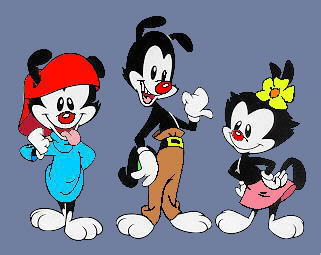
I had a conversation with my mom the other day about initial impressions, centered around American cartoons. (Because of course it was.) I was telling her how when I was in high school and got super obsessed with Animaniacs, I actually had a negative impression of the show before I saw it. I didn't like the character designs; I thought they looked suspiciously like a cross between Mickey Mouse and some amorphous old-timey "cartoon character." (The latter, I heard later, was intentional.) I tend to be less excited about fiction that humanizes animals, too, and my first impression of these cartoon characters was that they were some kind of bunny or dog.


But some of my friends were kind of obsessed with the show and I wanted to understand what the fuss was about, so I watched a clump of three episodes one day and I was immediately hooked. Like I mean it was instantaneous. Looking back, I don't have any idea why. It just was. I was about to go on a camping trip when it happened and I was all upset that I couldn't collect more of them while I was gone, so I actually made a friend tape them for me, and binge-watched it when I got home. This is in the days before Internet, too, so even though I'd gotten into it after the show had been on for a long time, it was a long time before I saw the majority of the episodes. I had to wait for them to come on one by one and enjoy them that way. And I had no master list, so when they started repeating, I never knew when the next one that came on might be a new one or a new-to-me one.

I still remember that I was turned off by the show's presentation, though--that I wasn't interested in checking it out until my friends liked it, and that I disliked the character designs. Some combination of seeing the characters' antics in context and the phenomenal voice acting really sold it for me, and I basically thought everything Yakko did was the most adorable thing in the universe, even though I used to think he wasn't interesting at all. If I tried to explain to people why I liked it so much, they usually still had whatever impression they'd initially had of the show, thinking it was too juvenile or obnoxious for them based on the commercials or how the characters looked. And I could understand that, even though I usually tried to evangelize and drag them into watching it with me.

Twenty years later, almost the exact same thing happened with Steven Universe. I saw images floating around Tumblr of these characters and didn't really read anything about the show; I thought it looked like another dumb action show from Cartoon Network with superheroes fighting monsters, and the character designs really put me off. I thought the oversimplified, geometric body types were awkward, and what really makes me laugh now is I remember I was especially annoyed by the design of the character who became my favorite. (I remember the first pictures I saw of the characters featured Garnet with her gauntlets out and I was like "why the HELL is that character wearing BOXING GLOVES? And why does her head look like a bread loaf?")


I'm not sure why I found the designs so unsettling when I first saw them, but I did. I didn't have the same problem with it that I did with the Animaniacs characters, thinking they were some kind of animal, but it was in the ballpark because I couldn't figure out what they were supposed to be. Were they some kind of stylized humans? (Then why would one of them be purple?) Robots? Monsters or something? Well, aliens, it turns out. Gemstone people from space. Works for me. Anyway, I had no interest in checking it out based on first impressions, but when Tumblr gets excited about something I usually end up checking it out just so I can even understand my dashboard. 

It has really been hit or miss, too--I'd say about half the time I just don't get whatever they're into (and then I feel old), but the other half the time I do see the appeal. Avengers fandom? Couldn't get it. Homestuck? I had trouble following it and gave up. RWBY? To tell you the truth I'm baffled. But when everyone started talking about Welcome to Night Vale I jumped in and continue to be a fan to this day. And I watched playthroughs of the game Undertale and I think it's super. When Steven Universe kept coming up in discussions of LGBT representation in my online circles, I'd wonder about it, then scroll past like I did with Loki fanfic and trolls with astrological symbols on their shirts, because I figured if I ever did check it out, I wouldn't want to be spoiled. When I saw a post discussing same-sex relationships in cartoons and saw SU compared to Legend of Korra (one of my favorite shows), I was kinda impressed that people were claiming it was an ongoing show with multiple same-sex relationships (and then I watched people arguing about whether it counted because the characters were female-presenting but were also sexless aliens), so I figured I needed to check it out despite my misgivings about the character design and my vague impressions of it as a shallow superhero show.

When fans of Steven Universe tell other people about the show, they often rush to tell potential "converts" that they will need to give it time to get good. I can't even tell you how many times I've heard "Make sure you keep watching until Episode 12" or even "It really gets good around Episode 25." (It always seems to be those two.) The truth for me was that I was pretty hopelessly in love with it by the end of Episode 1. When I am trying something new, I usually give it a good long try before either giving up or admitting I just didn't care for it, but historically, there is an immediate connection for me when I love something, and I know it practically from the first minute. For SU, there's just a brilliant combination of (again) voice acting and music, compelling concepts, and soulful character interaction, and that completely revolutionized the impression I had of it from seeing stills of the characters and witnessing sort of hokey commercials.

And I basically think everything Garnet does is cute, even if she does sometimes look like an overly stoic boxer with a square head.

~I think you're just mad 'cause you're single~
I'm that way with books, too. I can usually tell right away if I love something, because I'll have a connection with the characters or the voice or the flavor of the book. I can still like something if I didn't connect with it that way, like if I appreciate the message or I think it's a good idea or I can objectively understand that it was well-told and probably appealing to others. But if something doesn't cast that spell more or less immediately, I don't give it more than four stars on Goodreads and I don't add it to my favorites list.

The way I appreciate media has of course helped me figure out certain important aspects of how to write good stories, too. There's something to be said for the twist, for the build, for the reveal, for the long game. But you have to give the audience something amazing to connect to from page one--the thing they're sticking around for. The thing they care about. The character and concept they want to see play out. You don't have to show your whole hand and spend Chapter One doing a song and dance with all your best cards, but you have to lay the groundwork with a sense of permeating the audience's initial experience with a scent they like. And it can be really hard to figure out how to do that.

Ow, he hit me!
Ow, she bit me!
For me, I think that spell is usually constructed from personality and history. When I was watching Animaniacs, there wasn't really a story, per se, but the characters had clear personalities and I was entertained to see that they knew what to expect from one another, like a real sibling relationship. There were subtle cute things that happened, like how Wakko and Dot knew Yakko as the eldest brother was the talker and advocate of the group, so he was always at the front without complaint rattling off the jokes and supporting the others when it was their turn. Or how the CEO of the studio was always expecting the main characters to show up and ruin everything. Or how they had funny little personality clashes sometimes even though they primarily worked together to annoy people and crack jokes. The cartoon wasn't really about the characters' relationship to the extent that most other things I like are, but I saw it and loved it.

Goop hug!
In Steven Universe I obviously retained my tendency to have a crush on the leader, though she's the opposite of a talker, and I'm amazed by the layers of history these characters have racked up with each other. (I guess being together for several thousand years will do that to you.) But they gave me enough in Episode 1 to see that more was coming, without feeling too much like they were deliberately teasing me and stringing me along; since the show is presented from the point of view of a child character who wasn't there for the history that provides the framework, I can feel like the mysteries are natural and lend themselves well to a very slow reveal. You can respect that it takes its time with the forward plot and the architecture of its history, because you're learning about its existing relationships while watching new layers form. The future is a promise, but it's still based on something the creators gave you now.

So, as a writer and a person-who-sometimes-gives-advice-to-writers, all I can say is that this is how you do it. Do something right away that gives a peek at the soul of why people should consume your story. What's really special about it? What about that can you hint at or show during the audience's first exposure to it? Make sure you do it. Because even though some people will stick around and wait for you to get going, some others won't, and if they've given you the chance to talk to them by cracking the cover or pressing play, you may not have long to sell what you're offering. And even if you're not too fixated on keeping your audience interested, you should be interested in casting that spell as thoroughly as you can at the outset so people know what they've signed up for. You never want to feel like you need your audience to humor you until you get to the good part, at which point they'll realize what all the buildup was for.

There can be a feeling of payoff when they see where you were going with all that, but there has to have been something to stay for right at the beginning too. Even if your restaurant is about the food, give them a pleasant seating experience and a cushy chair. Even if your school is about the knowledge, give them a teacher they want to know more about and a classroom with learning tools in sight. Even if your story is about an adventure culminating in a hero defeating the bad guy, show us the hero's relationships and make us develop some feelings about his skills. Don't let us feel like we're kindly letting you tell us something you think is interesting. Make us want to be there by bringing your story's soul to Page One, and get us invested. Then we won't be able to wait to hear what you say next.